

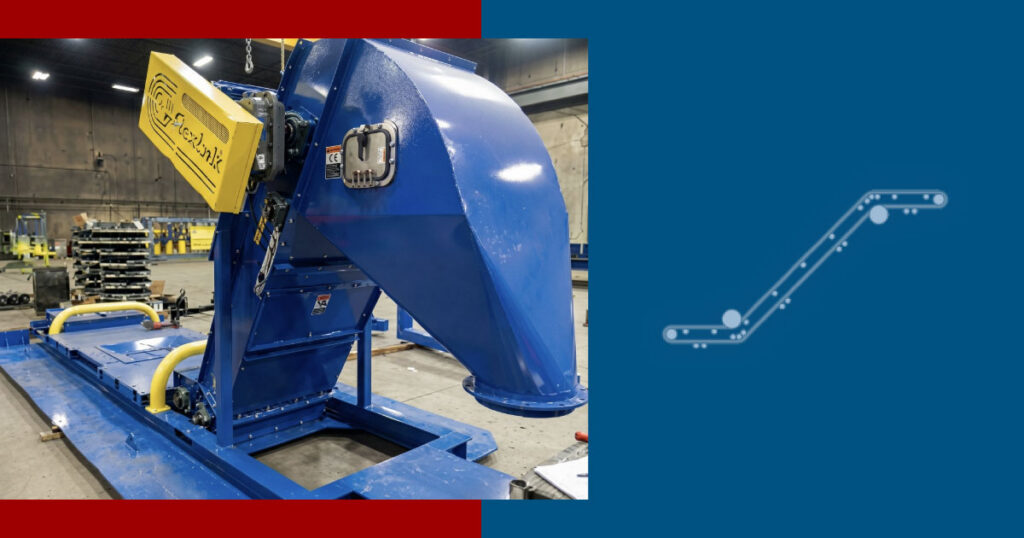
Z conveyor system
Z‑Configuration High‑Incline Conveyors
Z‑configuration high‑incline conveyors give plant designers a powerful way to move bulk materials up and over obstacles without expanding their footprint or adding a maze of transfer points. By bending a single conveying path into a horizontal–vertical–horizontal “Z,” operators can unlock capacity in yards and plants that feel full.
The Z‑configuration Advantage in Crowded Facilities
A Z‑shaped conveyor combines three sections on a single belt: a horizontal infeed, a steep incline, and a horizontal discharge at a higher level. This configuration is ideal when you need to pick up material at floor level—such as beneath a railcar, truck, or process discharge—and deliver it over equipment, structural beams, or traffic lanes to a new destination.
Compared with long, low‑incline systems, a Z‑configuration dramatically reduces the horizontal run, freeing space for trucks, storage, and other equipment. Because the material stays on a single belt instead of jumping between multiple conveyors, you also reduce the number of transfer points where spillage and dust typically occur.
Common Layout Challenges Z‑Conveyors Solve
In real plants and terminals, the drawing never matches the floor perfectly. Z‑configured high‑incline conveyors are especially effective when:
- Overhead obstructions prevent a straight incline.
- You must cross over walkways, pipes, or other conveyors.
- There is a limited rail- or truck-approach distance before a building or fence.
- You need to feed equipment at a specific elevation, but cannot move it.
For example, a Z‑conveyor can pick cement from a pit, climb steeply alongside a wall, then turn horizontal to feed an existing gallery or silo top without reworking the whole structure. In food, fertilizer, or packaged goods plants, Z‑frames are often used to take product up and over sensitive process areas or to reach mezzanines while maintaining a small footprint.
Designing Z‑Shaped Conveyors for Different Materials
The belt and profile choice determines how well a Z‑conveyor handles different bulk materials. Cambelt’s one‑piece sidewall belts (CamFlex, CamWall, and CamBelt) use molded sidewalls and cleats or nubs to keep material in place even on steep inclines.
Key design variables include:
- Belt style and pocket geometry for powders vs granules vs lumps.
- Incline angle, which can reach 65–75 degrees or even vertical with the right profile.
- Inlet and discharge design to control impact and minimize degradation.
Fine, dusty products like cement, fly ash, or fertilizer benefit from fully enclosed Z‑conveyors with tight sealing and dust‑controlled transfer points. Coarser aggregates or ores may use wider pockets and heavier compounds to manage impact and abrasion without sacrificing incline performance.
Integrating Z‑Conveyors With Existing Equipment and Controls
Z‑configured conveyors are often retrofitted into live plants, so integration matters as much as mechanical design. Successful projects align:
- Infeed height and orientation with existing pits, hoppers, or discharges.
- Discharge height and location with bins, silos, or downstream conveyors.
- Controls, interlocks, and VFDs (Variable Frequency Drives) with the site’s PLC (Programmable Logic Controllers) and safety logic.
Because a Z‑conveyor wraps three functions into one machine, it can replace multiple older conveyors and transfer points. Tying it into the control system lets operators start, stop, and modulate flow from a single point, simplifying operations and improving coordination with upstream and downstream equipment.
Safety and Maintenance Best Practices for Z‑Configured Systems
Any high‑incline conveyor must be designed and operated with safety and maintainability in mind. Important considerations include:
- Guarding all pinch points and rotating components along the full Z‑path.
- Providing safe walkways and access platforms for inspections and service.
- Using inspection doors and clean‑out points at inlets, bend points, and discharges.
Cambelt’s monolithic sidewall belts help reduce one of the biggest maintenance headaches—delamination of cleats and sidewalls—which is especially critical at the bend between horizontal and inclined sections. Planned inspections of belt condition, tracking, and structure, supported by lubrication and tightening routines, keep Z‑configured systems running reliably despite their complex geometry.
FAQs (Frequently Asked Questions)
Q1. When should I consider a Z‑configuration instead of a straight or L‑shaped conveyor?
Z‑configured high‑incline conveyors make sense when you must lift material up and over obstacles or into a restricted headroom area while preserving floor space and limiting transfer points. If a straight or L‑shape cannot clear existing equipment or structures, a Z‑shape is often the most compact option.
Q2. Do Z‑shaped conveyors require more maintenance than straight high‑incline systems?
Well‑designed Z‑conveyors with one‑piece sidewall belts and proper bend geometry do not inherently require more maintenance, but access planning is crucial to ensure technicians can safely inspect and service both horizontal and inclined sections. Good guarding, platforms, and inspection points keep maintenance efficient and support long belt life.