
CamWall™
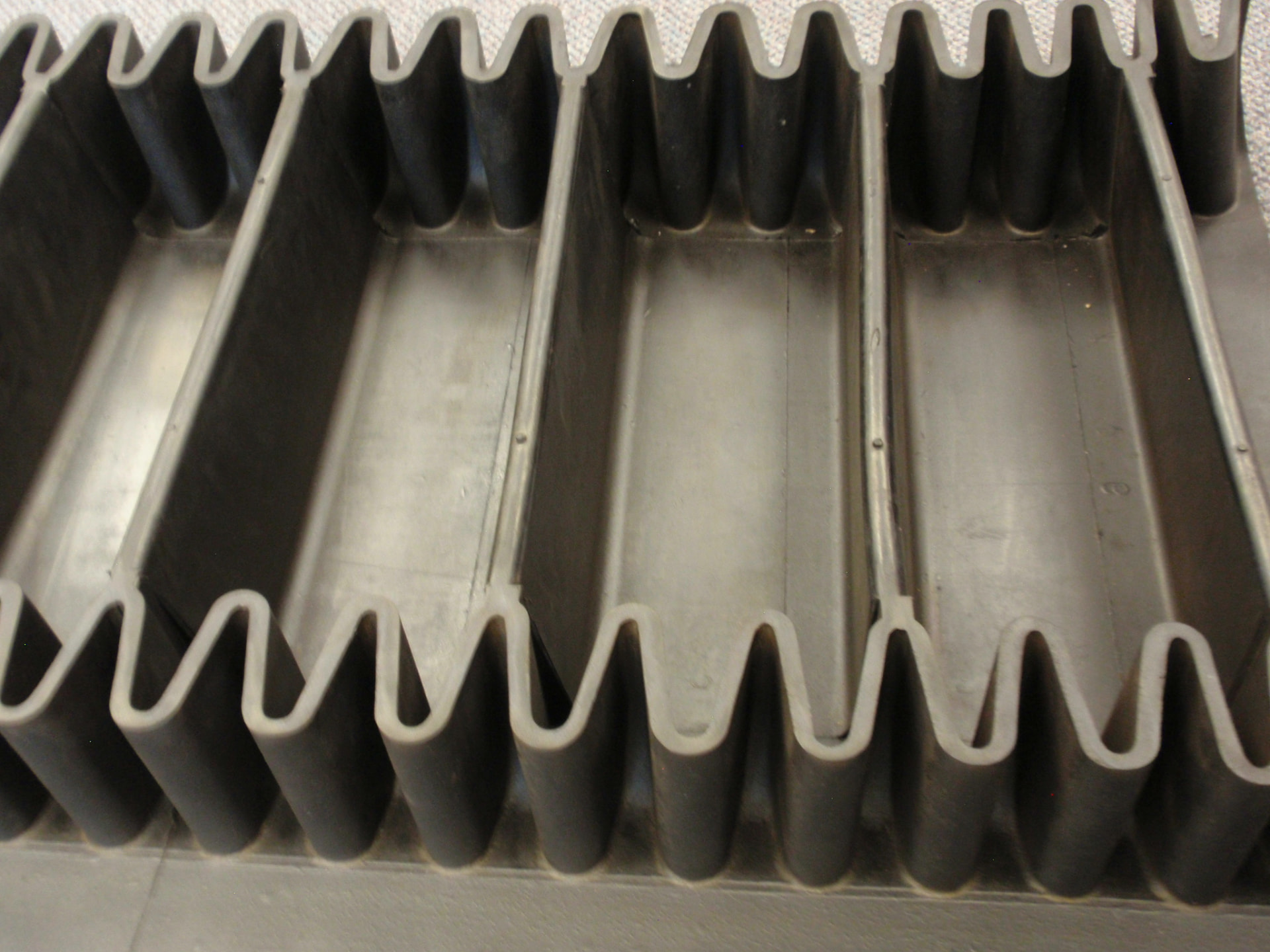
Corrugated sidewalls, molded in as one piece.
Maximum containment on steep inclines — material carried in sealed cross-sections.
Talk to an engineer→Conveyor Belts
Cleated containment, molded as one.
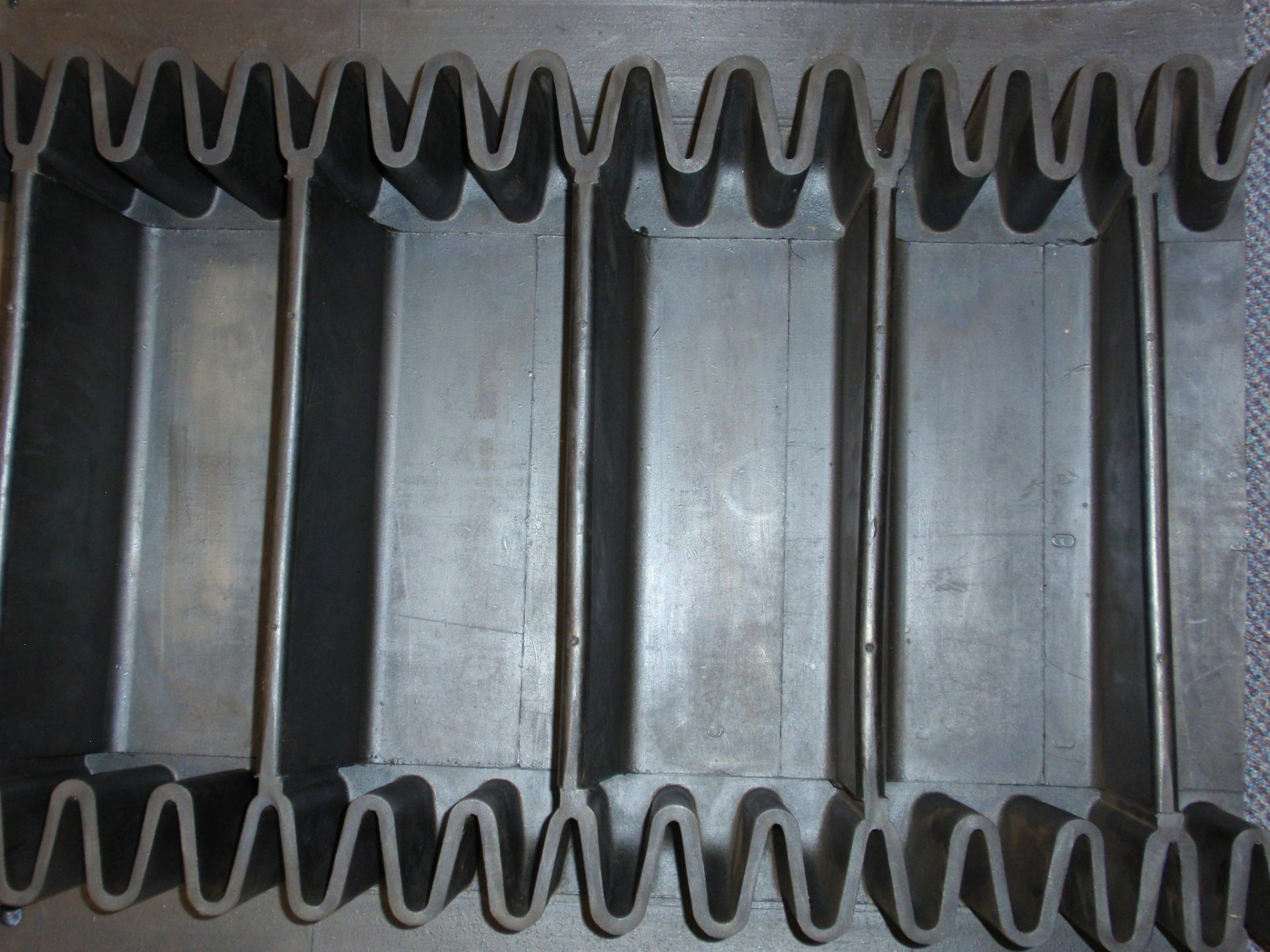
CamWall builds deep corrugated sidewalls and cross cleats directly into the belt as a single continuous piece of rubber. The result is a carrying cross-section that holds material at steep angles without spillback, with no glued-on sidewalls to peel or delaminate in service.
Choose the geometry before the model
CamWall has two distinct specification paths: CW for straight inclines, and CWR recessed belts where L or Z layouts require transition sections.
Engineering lens
Build a valid belt reference
Choose the operating geometry first. The available specification path narrows as you go.
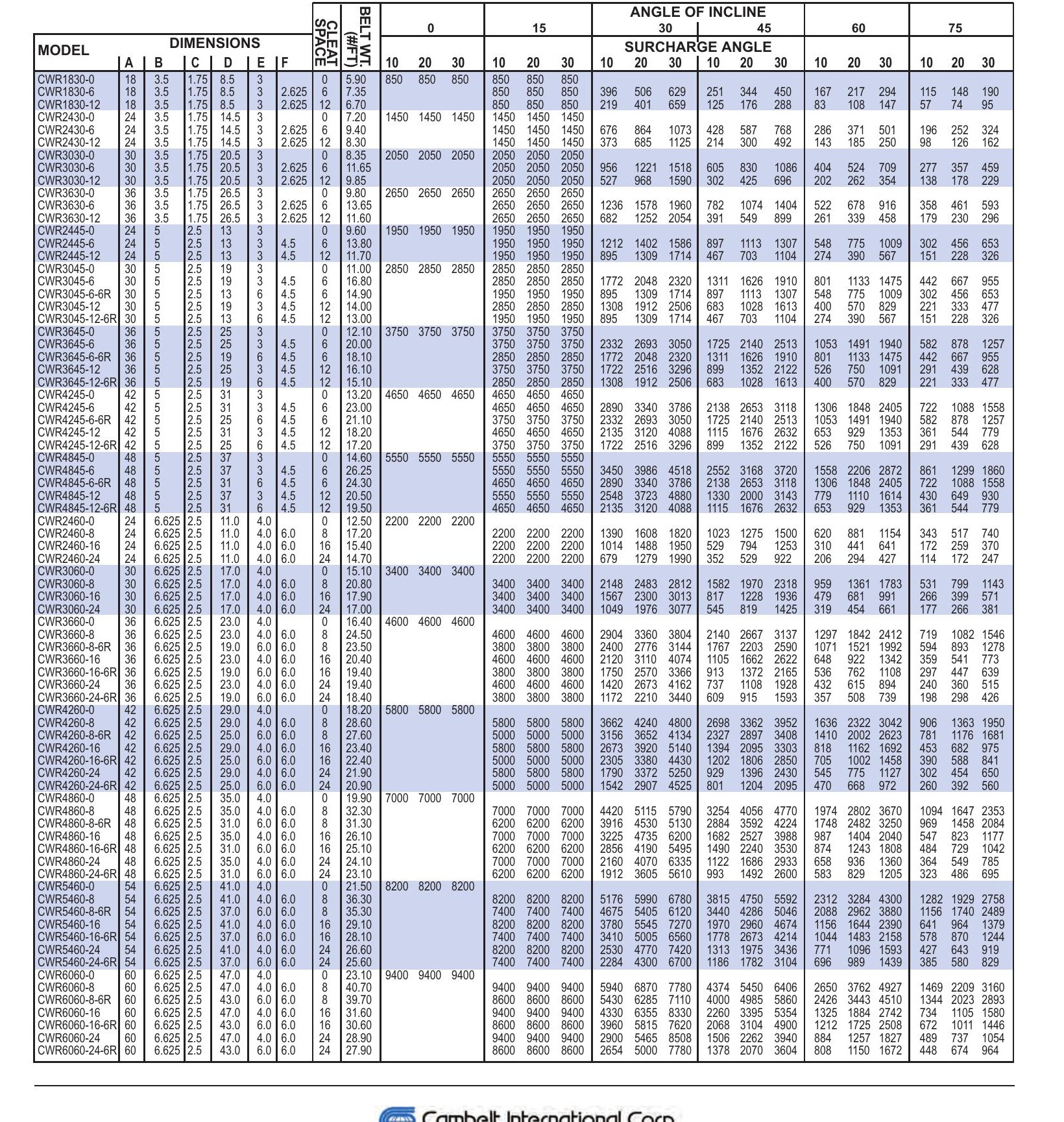
CamWall capacities use incline and surcharge angle at a fixed 100 FPM. Your selection is decoded in the result panel; the verified chart below lists capacity by model row.
Available belt widths
Published compounds
General purpose · Oil & fat resistant · Heat resistant · Flame retardant · MSHA approved · Conductive
Standard · Oil & fat resistant
Read the model name
CWR
CamWall Recessed
36
36-inch belt width
45
4.5-inch sidewall
12
12-inch cleat spacing
CW = CamWall · CWR = CamWall Recessed · CF = CamFlex with nubs
Open verified source-chart lens
Where it works
Sand & gravel
Wet or dry granular material through washing, classifying, and stockpiling.
0Fertilizer
Reactive or corrosive material requiring compounds matched to the chemistry.
1Industrial minerals
Limestone, potash, trona, and salt — often corrosive or abrasive.
2Recycled & scrap material
Unpredictable streams where containment matters.
3
Compare belt families
Manufacture conveyors? Specify Cambelt.
Our proprietary one-piece molded belting is engineered for OEM applications.