

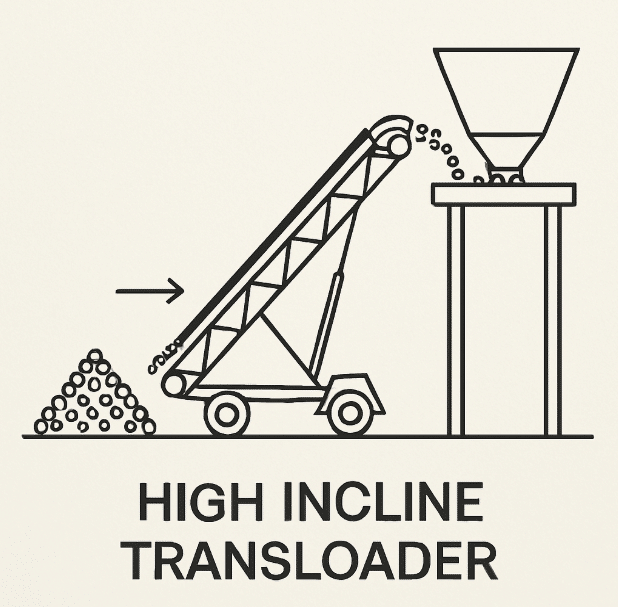
 High incline transloaders are revolutionizing bulk material handling. They streamline the transfer process between rail, truck, and storage facilities.
These machines are designed to handle diverse materials like grains and minerals, cement, flyash, frac sand, etc.. Their incline conveyor systems allow for steep material movement, optimizing space.
This efficiency reduces the need for extra equipment and shortens loading times. Advanced safety features ensure secure operations, making them a reliable choice.
Transloading equipment is customizable to meet specific industry needs and material types. This adaptability leads to cost savings and improved productivity.
High incline transloaders are available for sale, offering options for various budgets. Investing in one can significantly enhance logistics operations.
What is a High Incline Transloader?
A high incline transloader is a specialized machine used in logistics. It facilitates the movement of bulk materials between various transportation modes.
These machines are specifically designed to handle steep angles at 50 degrees with a belt speed of 700 feet per minute, optimizing space and efficiency. This capability enables quick, seamless material transfers.
Key components include:
- Incline conveyor system for steep material movement
- Customizable features for industry-specific needs
- Advanced safety features for secure operations
The design is robust, ensuring durability in harsh environments. This makes them indispensable in fields like agriculture, oil & gas, cement, and mining. Investing in such equipment can drastically improve operational efficiency and reduce labor costs in your logistics processes.
Key Features of High Incline Transloaders
High-incline transloaders boast numerous features that make them essential for bulk material handling. These features are designed to ensure operational efficiency and user safety.
One crucial aspect is their inclined conveyor system. This system allows materials to move at steep angles, optimizing space and reducing the need for additional equipment. Such efficiency is unparalleled in the industry.
The machines are customizable, fitting specific operational needs. Depending on industry requirements, you can tailor the equipment for improved performance. This flexibility ensures that transloaders meet various standards.
Key features include:
- Advanced safety mechanisms
- Durability under harsh conditions
- Compatibility with existing logistics systems
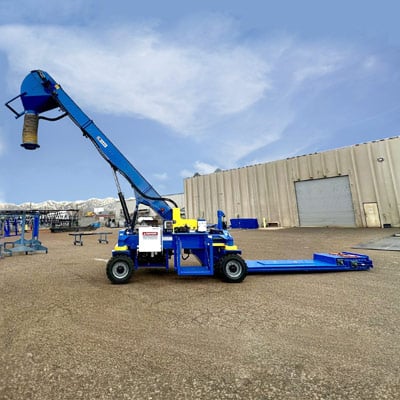
Cambelt`s Transloader
Lastly, these transloaders are engineered for easy maintenance. With accessible components, routine checks and repairs become simpler, ensuring minimal downtime. Choosing the right features ensures that your transloading operations run smoothly and efficiently.
Benefits of Using High Incline Transloaders for Rail, Truck, and Bulk Transfers
High-incline transloaders offer significant benefits for material transfers across rail, truck, and bulk operations. These benefits enhance both the efficiency and cost-effectiveness of logistics processes.
By reducing loading and unloading times, these transloaders improve overall operational speed. This swift process minimizes delays, keeping the supply chain moving smoothly. Faster operations mean improved productivity.
Users also experience reduced labor and operational costs. Automation in the equipment reduces manual handling, which saves on labor costs. The transition to automated processes often results in long-term savings.
Key benefits include:
- Increased operational speed
- Reduced labor costs
- Improved safety features
Additionally, the ergonomic design enhances workplace safety by reducing manual material handling, contributing to a safer environment. This setup is vital for industries aiming to maximize efficiency.
Applications Across Industries
High-incline transloaders are versatile machines that serve a range of sectors. They are crucial for industries requiring efficient bulk material handling solutions. Their adaptability makes them an indispensable tool in many operations.
In agriculture, these transloaders help transport grains and seeds efficiently. By moving large quantities swiftly, they ensure a steady supply chain. Mining, cement and frac sand industries also rely heavily on them for transferring minerals.
Manufacturing settings benefit from their ability to move raw materials. Their sturdy design supports continuous heavy-duty operation. This improves production rates and enhances material flow, thereby streamlining processes.
Key industry applications include:
- Agriculture
- Mining
- Cement
- Oil & Gas
- Manufacturing
Across these industries, high incline transloaders meet specific demands. They provide crucial support for ongoing material transfers, making them essential equipment. Their diverse applications ensure they remain a top choice in various sectors.
How to Choose the Right Transloading Equipment
Selecting the right transloading equipment involves careful consideration of your operational needs. Start by assessing the types of materials you’ll handle. Different materials require specific features for smooth and safe transfer.
Capacity requirements are crucial in this decision. Consider both current and future demand to ensure the equipment can meet your needs. Transloaders vary in size and capacity, so ensure the model aligns with your throughput goals.
Evaluate additional features such as automation options or dust suppression systems. These can enhance efficiency and safety in your operations. Ultimately, aligning the equipment’s capabilities with your requirements ensures a wise investment.
Key factors to consider include:
- Material type
- Capacity needs
- Additional features
New High Incline Transloaders for Sale
When seeking a high-incline transloader, you have options to suit your budget. New models offer the latest technology and warranties, ensuring reliability and efficiency.
When buying new, ensure compatibility with your existing systems. Check if the model can handle your specific materials and operational demands. This careful evaluation maximizes your investment and operational efficiency.
Consider these when making a purchase:
- Budget
- Condition and history (for used options)
- Compatibility with systems
Maintenance and Safety Considerations
Proper maintenance extends the life of your high incline transloader. Routine checks ensure all components work optimally. Regular inspection helps prevent unexpected breakdowns and costly repairs.
Safety is paramount when operating transloading equipment. It’s crucial to follow the manufacturer’s guidelines for safe use. Train your team on safety protocols to minimize risks and improve efficiency.
Consider the following tips:
- Schedule routine maintenance
- Follow the manufacturer’s safety guidelines
- Train operators regularly
By focusing on maintenance and safety, you optimize performance and protect your investment in high-incline transloaders.
Frequently Asked Questions
When considering a high incline transloader, common questions often arise. To assist prospective buyers, we’ve compiled answers to frequently asked questions.
Common Questions:
- What materials can it handle?
- How much space is needed for installation?
- What are the maintenance requirements?
Understanding these aspects helps in making an informed purchasing decision. It’s always beneficial to consult with manufacturers for specific concerns. This ensures the chosen equipment aligns with operational needs.
Conclusion: Boosting Efficiency With the Right Incline Conveyor System
High incline transloaders are game-changers in material handling. They streamline transfer processes and optimize logistical operations. By choosing the right incline conveyor system, businesses can enhance efficiency and productivity.
Investing in quality transloading equipment leads to faster operations and reduced costs. It ensures materials are safely and effectively transferred across various platforms. Ultimately, the right equipment not only meets current demands but also supports future growth. This makes it a vital component in any modern industrial setup.