

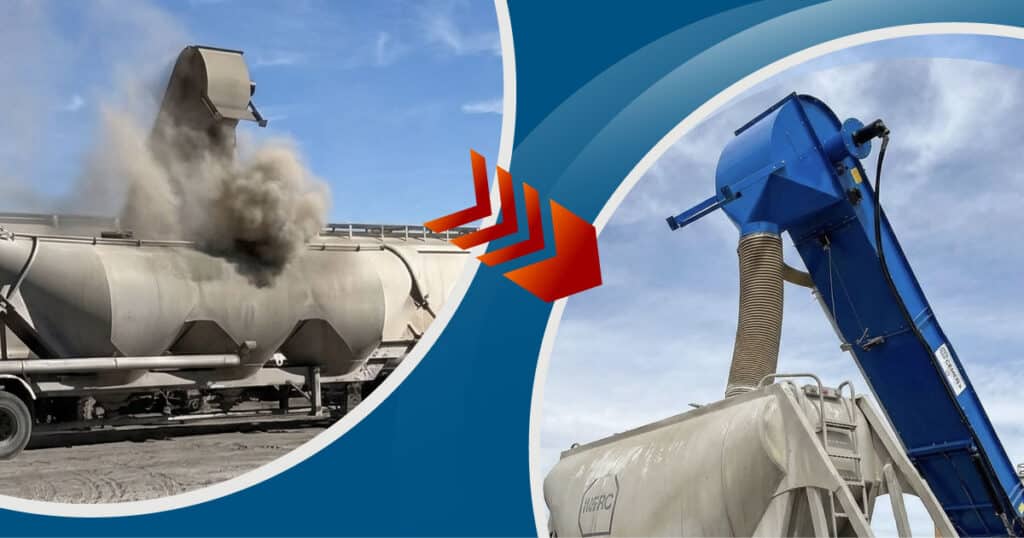
 High‑incline enclosed conveyors can dramatically cut spillage and dust, but transfer points still make or break your bulk handling system’s cleanliness, safety, and efficiency. Thoughtful transfer‑point design keeps fines where they belong, protects your equipment, and helps satisfy tightening environmental expectations.
Root Causes of Dust at Conveyor Transfer Points
Most dust problems start at the same places: where material changes direction, drops, or lands on a belt. Key drivers include:
- Excessive drop height from chute to belt.
- Belt speed that is too high for the material and loading geometry.
- Misaligned or poorly centered flow.
- Abrasive or friable materials that fracture on impact.
Even with enclosed high‑incline conveyors, poorly designed inlets, chutes, and discharge points can create dust plumes inside housings that escape at gaps, inspection doors, or downstream connections. That is why dust control has to start with the physics of how material enters and leaves the conveyor—not just with add‑on filters and ductwork.
Best Practices for Chute and Inlet Design on High‑Incline Systems
On high‑incline enclosed conveyors, the goal is to gently, centrally, and consistently load material into the sidewall pockets. Effective transfer‑point designs typically:
- Control the velocity of material using properly angled chutes and impact zones.
- Match the material speed to the belt speed to minimize turbulence and bounce.
- Use robust skirtboards and sealing that mate naturally with the belt profile.
Correctly sized and shaped chutes reduce impact and abrasion, protecting both the belt and the structure. For very fine or abrasive materials, lining surfaces with wear‑resistant materials and shaping the flow path to avoid dead zones reduces buildup and secondary dust generation.
Integrating Dust Collection and Ventilation With Enclosed Conveyors
Enclosed conveyors significantly limit dust escape, but they still need well‑planned ventilation at loading and discharge points. Good practice includes:
- Locating dust collection hoods close to where the material actually drops.
- Capturing displaced air from chutes, pits, and head housings.
- Balancing airflow so the system captures dust without pulling product.
In rail pits, for example, coordinated under‑track ventilation and conveyor inlet capture can control dust while maintaining visibility and safe working conditions for operators. At head sections, strategically placed vents and hoods pull fines into collectors rather than into galleries or building spaces.
Automation and Sensing for Dust‑Controlled Loading
Modern Programmable Logic Controllers (PLCs) and Variable Frequency Drives (VFDs) give operators powerful tools to control dust at transfer points. Automated logic can:
- Ramp belts up and down smoothly to avoid sudden surges.
- Coordinate feed equipment and conveyor loading to prevent overloading.
- Interlock conveyors with dust collectors so they cannot run without capture.
Sensors for level, belt speed, motor load, and differential pressure in dust collectors provide real‑time feedback. When linked to alarms and historian data, these signals help improve reliability and enable ESG teams to track dust performance and optimize operating setpoints over time.
Field Checklist: Auditing Existing Transfer Points
Before committing to a full retrofit, a quick audit can reveal “low‑hanging fruit” at existing transfer points. A practical checklist includes:
- Visible dust clouds or residual dust patterns around chutes and housings.
- Spillage accumulation under structures, walkways, or galleries.
- Worn or misaligned liners, skirtboards, and seals.
- Evidence of off‑center loading or uneven belt wear.
Documenting these issues with photos and simple measurements helps prioritize quick fixes versus larger modifications. Often, small changes in chute angle, sealing, or airflow deliver outsized improvements in dust performance, especially when paired with enclosed high‑incline conveyor technology.
FAQs(Frequently Asked Questions)
Q1. If I install high‑incline enclosed conveyors, do I still need dust collectors at transfer points?
Yes. Enclosed conveyors dramatically reduce dust escape, but loading and discharge areas still need well‑designed ventilation and dust collection to control the air displaced by falling material.
Q2. What is the fastest way to identify problem transfer points in an existing system?
Look for visible dust clouds, recurring spillage, worn seals, and uneven belt wear at inlets and discharges; these signs usually point to underlying design or airflow issues that warrant addressing first.