

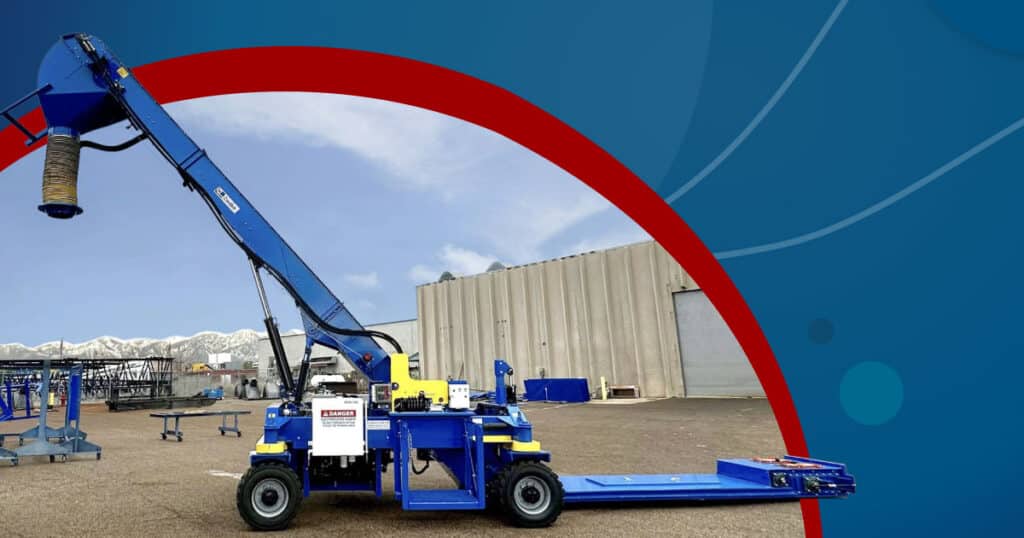
The right mobile transloader can be the difference between a congested rail spur and a smooth, profitable rail‑to‑truck operation. Selecting that machine means looking beyond headline tons‑per‑hour ratings to match real‑world materials, layouts, and duty cycles.
Key Application Questions to Answer Before Shortlisting Transloaders
Choosing a mobile transloader starts with understanding your material and your operation. Ask:
- What materials will you handle—cement, fly ash, grain, fertilizer, frac sand, aggregates?
- What are the bulk density, abrasiveness, moisture content, and flow characteristics?
- What throughput do you need (tons per hour) and for how many hours per day or days per year?
Fine, abrasive powders demand robust enclosed conveying and great dust control, while coarse aggregates may require higher impact resistance and larger clearances. Seasonal or peak‑driven terminals may accept slower average rates if the machine can be redeployed or shared between sites.
Comparing Mobility and Setup Requirements in Raill Yards
Rail yards and terminals are rarely textbook‑perfect. Curved tracks, tight spots between buildings, and low‑clearance cars all affect the choice of transloader. When comparing units, focus on:
- Inlet profile and how easily the loader can reach under different railcar gates.
- Steering, wheelbase, and manoeuvrability around switches, scales, and truck lanes.
- Setup time from arrival to ready‑to‑load, including jack‑down, stabilization, and power hookups.
For operations with short “windows” to clear a cut of cars, fast setup and repositioning may matter more than top‑end capacity.
Power, Controls, and Operator Ergonomics
Power and control choices directly affect fuel use, flexibility, and operator satisfaction. Buyers should evaluate:
- Diesel, electric, or hybrid drive options and their availability at the site.
- Control layout, visibility to the inlet and discharge, and ease of communication with truck drivers.
- Safety features such as guarding, emergency stops, and safe access platforms.
A well‑designed interface reduces training time and mistakes, which is especially important at terminals with rotating or seasonal crews. Good sight-lines and lighting around the inlet and discharge points improve safety and help operators maintain clean, accurate loading.
Maintenance Access and Support Considerations
Mobile transloaders live hard lives; easy maintenance is crucial for uptime. Evaluate:
- How quickly belts can be inspected, tensioned, or replaced.
- Access to bearings, drives, and hydraulic components for routine service.
- Availability of OEM technical support, parts stocking, and remote troubleshooting.
A unit that uses standard, well‑supported belt designs and components will typically have shorter downtimes and more predictable maintenance costs. Factory training and service programs can further extend equipment life and improve safety.
Example Selection Scenarios
A small regional ag co‑op might prioritize flexibility: a single mobile transloader that can handle grain in harvest season and fertilizer in the off‑season. For them, moderate capacity, gentle handling, and easy maneuvering around existing bins and scales may outrank maximum throughput.
A large industrial terminal serving cement, fly ash, and frac sand may choose a heavier‑duty unit optimized for fine, abrasive materials and long shifts. They are likely to value enclosed conveying, high‑capacity belts, and strong OEM support to protect uptime during continuous operation. Matching the machine to the real operating profile ensures that the investment pays off quickly.
FAQs (Frequently Asked Questions)
Q1. What is the most important factor when choosing a mobile transloader?
The most critical factor is fit to your specific materials and operating profile—throughput, duty cycle, and yard constraints—because a mismatch here will drive chronic downtime and high operating costs.
Q2. How can I reduce risk when investing in a new transloader?
Gather detailed data on materials, railcar types, clearances, and shift patterns, then work with vendors to model capacity, maintenance, and support; demos, rentals, or pilot deployments can further validate real‑world performance before a full purchase.